Obsolete Parts
Legacy equipment may still be reliable even though the original manufacturer has stopped supplying individual parts. A surviving component can provide the basis for a locally manufactured replacement.


Brisbane Engineering Workshop
When the original drawing is missing, the manufacturer no longer supports the equipment, or a critical component is worn, damaged or difficult to source, reverse engineering can provide a practical path to a locally manufactured replacement.
Monarch General Engineering can assess existing industrial components, reconstruct usable manufacturing information and, where suitable, manufacture or modify replacement parts from our Brendale workshop.
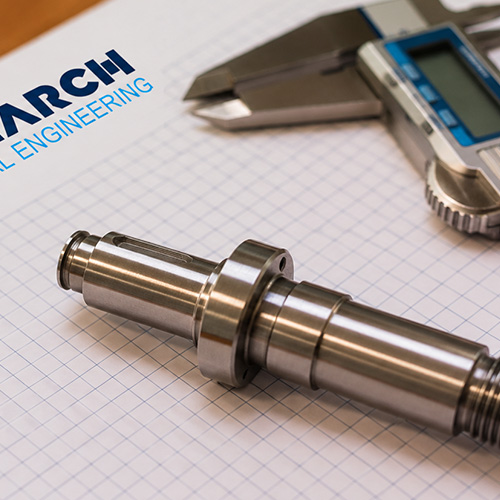
Industrial equipment often remains productive long after original drawings, CAD files, tooling or OEM support have disappeared. A machine may still have years of useful service remaining, but one worn or unavailable component can create an expensive maintenance problem.
Reverse engineering works backwards from the physical component and the information available around it. The objective is not simply to copy a shape. It is to understand enough about the part—its geometry, interfaces, fit, material, function and operating conditions—to create practical manufacturing information and a suitable replacement.
For straightforward components this may involve conventional measurement and workshop drawings. More complex parts may require CAD reconstruction, comparison with mating components, specialist measurement or 3D scanning where appropriate. The method is selected to suit the part and the level of accuracy actually required.
Reverse engineering is especially useful where buying a standard replacement is no longer practical.
Legacy equipment may still be reliable even though the original manufacturer has stopped supplying individual parts. A surviving component can provide the basis for a locally manufactured replacement.
Shafts, bushes, sleeves, pins and other components can lose material in service. The task is to identify wear and reconstruct the intended fit rather than simply reproduce the worn dimensions.
A fractured or incomplete sample may still contain enough information to rebuild the component when combined with mating parts, equipment dimensions, photographs, manuals or other reference material.
For suitable industrial components, local manufacture can remove dependence on long international supply chains and create a repeatable local source for future requirements.
A component that has been operating for years may no longer represent the dimensions it had when it was new. Wear, corrosion, deformation, previous repairs and operating loads can all alter the part. Reproducing those changes exactly may reproduce the problem.
A practical reverse engineering review therefore considers the component in context. Where relevant, we look at mating parts, bearing or seal locations, threads, clearances, mounting points, likely manufacturing methods and the duty the component performs.
The amount of engineering effort should also be appropriate to the job. A simple spacer does not need the same process as a fit-critical rotating component. We aim to establish a sensible path that reflects function, risk, required accuracy, quantity and cost.
The exact process varies with the part, but a typical reverse engineering job follows the steps below.
Review photos, dimensions, quantity, required date, equipment information and the reason the replacement is needed.
Assess condition, visible wear, damage, interfaces, previous repairs and any features that require further investigation.
Use suitable workshop measurement, CAD reconstruction and, where justified, specialist measurement or scanning methods.
Distinguish likely original features from wear, distortion or damage and consider how the part interacts with the equipment.
Prepare the practical dimensions, model or drawing information required for quoting and manufacture.
Select suitable material and processes such as turning, milling, fabrication, forming, welding or a combination of operations.
Produce the agreed component and inspect relevant dimensions or features before delivery.
Where agreed, retain manufacturing information so future requirements can become repeat orders rather than a new reverse engineering exercise.
Sometimes the correct outcome is to reproduce the original component as closely as practical. In other cases, the original part has a known weakness, the operating duty has changed, or a small modification could improve serviceability.
Subject to appropriate engineering review, reverse engineering can provide an opportunity to consider changes to material, wear surfaces, replaceable bushes, mounting details, fabrication methods or other features.
Any proposed modification should be considered against the actual function, loads, operating conditions, safety requirements and interfaces of the equipment. Changes are not made simply for the sake of redesign.
Suitability depends on size, geometry, material, tolerances, condition and the information available, but the following are common examples.
Replacement shafts, pins, axles, spindles and similar turned components, including parts with worn bearing, seal or coupling locations.
One-off or repeat bushes, sleeves, collars, spacers and wear components manufactured to suit existing equipment or mating components.
Custom interfaces, machine adaptors, mounting plates and non-standard flanges where the original specification is unavailable or no longer practical.
Selected replacement parts for legacy machinery, process equipment, conveyors and general industrial plant where sufficient reference information is available.
Brackets, guards, housings, frames, trays and fabricated assemblies that can be measured from an existing item and reproduced or modified.
Replacement parts associated with pumps, strainers, filters and process equipment, supported by Monarch's long-standing industrial filtration experience.
A useful CAD model is only part of the solution when the real objective is to get equipment operating again. Monarch's Brendale workshop combines general machining, fabrication and CAD capability so suitable jobs can move from assessment to manufacture without treating each stage as a separate exercise.
Depending on the component, manufacturing may involve general lathe work, milling, drilling, welding, fabrication, sheet-metal operations, forming, CNC plasma cutting or a combination of processes. Specialist processes can be incorporated where appropriate to the job.
Material selection is considered in relation to the original component and service conditions. Common workshop materials include carbon steels, stainless steels, aluminium and other machinable or fabricable materials, subject to suitability and availability.
The first replacement often requires the most investigation because the original part must be measured, understood and converted into usable manufacturing information. Once that work has been completed and the final component is proven, the information can provide the basis for future repeat manufacture.
This is particularly valuable for maintenance teams managing older plant. Instead of waiting for the same component to fail again before starting from zero, selected critical parts can progressively be converted into documented replacement items.
For repeat requirements, ask us about maintaining an agreed drawing, model or manufacturing record linked to your part description or equipment reference.
Replacement components, machine modifications and maintenance support.
Suitable stainless and general engineering components for process and production equipment.
Mechanical components, filtration-related parts and plant maintenance items.
Components associated with strainers, filters, pumps and packaged process equipment.
Replacement and modified components for industrial processing equipment.
Workshop support for suitable wear, maintenance and replacement components.
Subcontract component manufacture, prototypes, modifications and legacy support.
Local workshop support for shutdowns, repairs and difficult-to-source replacement parts.
The quickest way to establish whether a component is likely to be suitable is often to send clear photographs and a short explanation of the problem. We can then advise what additional information or physical inspection is likely to be required.
Email a few photos and tell us what the component does. We can review the information and advise the next practical step.
Workshop: Unit 3, 8 Bult Drive, Brendale QLD 4500. Please contact us before delivering large or heavy components.
Start with what you have. Send Monarch General Engineering a few photos, approximate dimensions and an explanation of the problem and we can assess the most practical next step.