Monarch General Engineering & Liquid Filtration Products Brendale
Monarch General Engineering Services - workshop machining and fabrication

LNG & Gas Processing Application

LNG & Gas Processing Application

LNG Cone Strainers

Large-diameter conical strainers provide practical protection for LNG compressor stations and gas-processing equipment during construction, flushing, commissioning, start-up and recommissioning.

Monarch Asia Pacific manufactures custom cone strainers in Australia for demanding pipeline services where high flow, mechanical strength, adequate open area and reliable debris retention are critical.
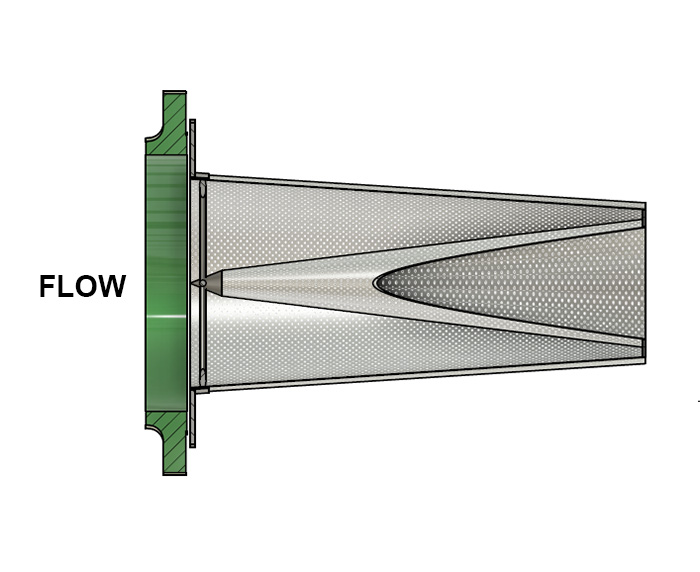
Large diameter inline conical strainer for LNG compressor station protection
Primary Duty
Protect compressors and downstream equipment from pipeline debris.
Typical Service
Commissioning, flushing, start-up, tie-ins and recommissioning.
Construction
Perforated, mesh-lined, wedge wire or combination screens.
Custom Manufacture
Large-diameter and reinforced designs manufactured in Brisbane.

Protecting LNG Compressor Stations from Pipeline Debris

LNG and gas-processing systems contain high-value equipment that can be sensitive to solid contamination. Compressors, pumps, metering equipment, valves, seals and instrumentation can all be affected by foreign material carried through the pipeline.

New construction, shutdown work, pipeline tie-ins, upgrades and maintenance can introduce or disturb debris such as weld slag, rust, mill scale, gasket fragments, coating particles and general construction residue. If this material reaches critical equipment it can contribute to erosion, blockage, seat damage, premature wear and unplanned downtime.

An inline conical strainer provides a simple mechanical barrier within the pipeline, capturing damaging solids while maintaining the flow area required for flushing, testing and commissioning.
Typical contaminants:

  • Weld slag
  • Rust and corrosion products
  • Mill scale
  • Pipe fabrication debris
  • Gasket fragments
  • Coating particles
  • Construction residue
  • Foreign material from maintenance work
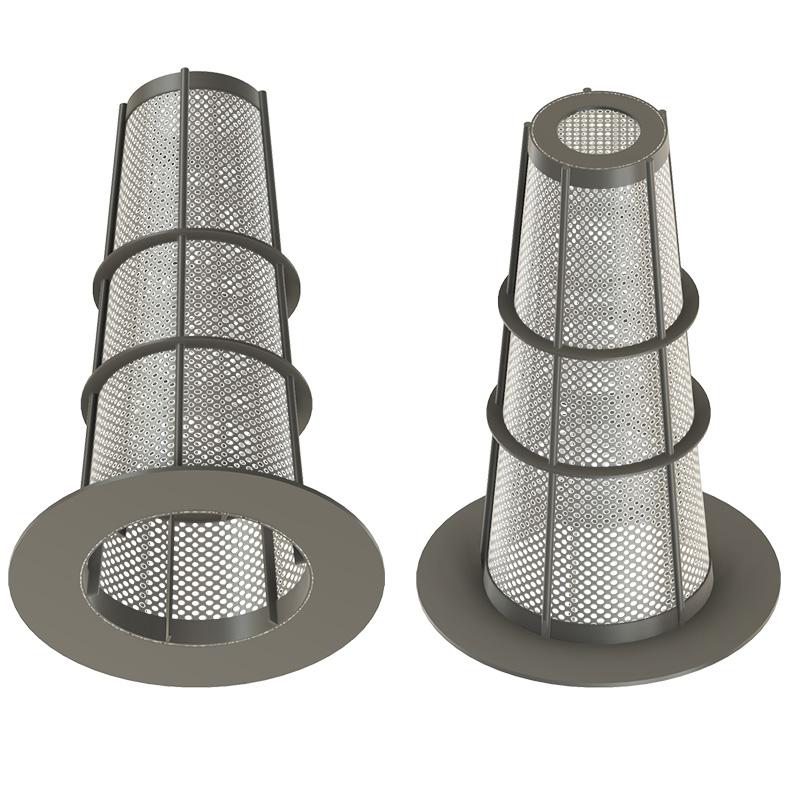
Inline LNG cone strainer protecting compressor station equipment

Why Conical?

Large Filtration Area in an Inline Installation

Conical strainers, including truncated cone designs with inverted sections, can provide significantly greater screening area than a flat plate installed within the same pipe bore. The increased filtration area helps reduce clean pressure drop, provides greater dirt-holding capacity, and can extend the operating period between inspection and cleaning.

This is particularly valuable in large-bore LNG and gas pipelines where high flow rates and significant debris loads can make a small or highly restrictive element impractical.

Cone length, included angle, screen construction and reinforcement can be adjusted to suit the available installation space, required open-area ratio and mechanical duty.

Typical LNG Cone Strainer Duties

Cone strainers may be used at several stages of LNG and gas infrastructure projects.

Pre-Commissioning

Capture construction and fabrication debris while new systems are being cleaned and prepared for service.

Pipeline Flushing

Protect downstream equipment while debris is progressively removed from large process and utility lines.

Start-Up

Provide temporary equipment protection while the cleanliness and stability of the process system are established.

Shutdowns & Tie-Ins

Reduce contamination risk following maintenance, modifications, brownfield tie-ins and recommissioning work.

LNG Cone Strainer Design Considerations

Large-diameter cone strainers should be designed around both process performance and mechanical integrity.

The overall geometry must suit the pipeline diameter, flange arrangement, pressure class and available installation space. Flow rate and gas or liquid properties are used to assess velocity, clean pressure loss and the effective screen area required.

Perforation or mesh size should be selected to stop debris capable of damaging downstream equipment without making the strainer unnecessarily restrictive. Expected contamination size and type should be considered together with the allowable pressure drop.

Effective open area is critical in high-flow services. The calculation should consider the actual open area of the filtration layer, not only the gross surface area of the cone or the perforated support. Fine mesh can reduce effective free area significantly.

As debris accumulates, differential pressure across the cone increases. Large-diameter or fine-screen designs may require support rings, internal or external reinforcement, stronger perforated backing or other structural features to resist deformation or collapse at the specified differential pressure.

Material selection depends on the service, corrosion environment, temperature, project specification and mechanical requirements. Common project materials may include carbon steel, 304 stainless steel, 316 stainless steel and duplex grades such as 2205 where specified.

The intended flow direction, cone orientation, flange arrangement, lifting requirements and access for removal should be established before manufacture. Large units may require dedicated lifting points, support details or installation features to assist safe handling.

Screen Construction Options

The filtration layer can be tailored to the expected debris and mechanical duty.

Perforated Plate

Robust construction for coarse debris retention and high mechanical strength.

Perforated Support + Woven Mesh

A structural perforated cone supporting a finer mesh layer where smaller particles must be retained.

Wedge Wire or Special Screen

Alternative screen constructions can be considered where specified by the process or project design.

Temporary vs Semi-Permanent Duty

Many LNG cone strainers are installed for a defined commissioning or start-up period and removed once acceptable pipeline cleanliness has been demonstrated.

In other applications, the cone may remain in service for an extended period as part of the overall mechanical protection strategy. Longer-duration service places greater emphasis on clean pressure drop, expected dirt loading, reinforcement, access for inspection and the consequences of progressive blockage.

Important: the allowable differential pressure and inspection or cleaning procedure should be established as part of the project operating plan.

Related Cone Strainer Options

The final arrangement can be adapted where standard cone geometry does not provide the required area, support or installation fit.

Standard Cone Strainers

Custom perforated or mesh-lined cones for temporary and commissioning protection.

View Cone Strainers Standard Cone Strainers

Truncated Cones

Useful where a shorter overall length or increased screen area within an installation envelope is required.

View Options Truncated Cones

Inverted Cone Sections

Additional screen sections can increase available area where overall cone length is constrained.

View Options Inverted Cone Sections

Reinforced Designs

Support rings, structural backing and other reinforcement can be added for demanding differential-pressure duty.

View Options Cone Reinforced Designs

Information Required for Design & Quotation

The more complete the operating information, the better the cone can be matched to the process and mechanical requirements.

Monarch can work from project datasheets, drawings, existing strainer details or a defined set of process conditions.
Useful information includes:

  • Pipeline nominal diameter and schedule
  • Flange standard and pressure class
  • Gas or liquid service
  • Normal and maximum flow rate
  • Operating and design pressure
  • Operating and design temperature
  • Allowable clean and dirty pressure drop
  • Expected debris type, size and loading
  • Required perforation, mesh or micron rating
  • Specified material grade
  • Required straining or open-area ratio
  • Flow direction and cone orientation
  • Available face-to-face / cone length
  • Required differential-pressure resistance
  • Temporary, semi-permanent or permanent duty
  • Inspection, lifting and handling requirements
  • Project documentation and identification requirements
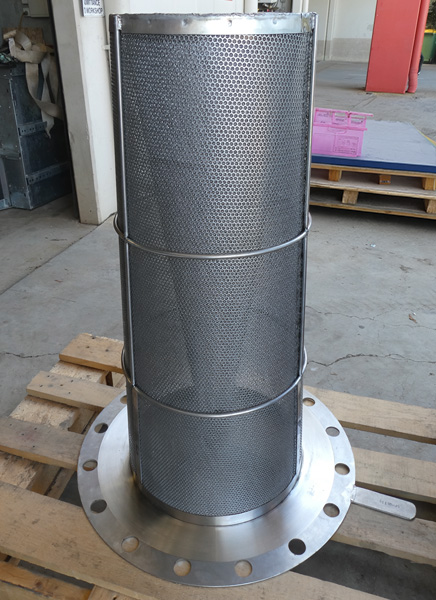
Large conical strainer fabrication in Monarch Brisbane workshop

Australian Manufacture + Workshop Support

Custom Large-Diameter LNG Cone Strainers

Monarch Asia Pacific combines industrial filtration experience with in-house sheet-metal, cone-forming, welding and fabrication capability from our Brendale workshop.

This is particularly useful for large-diameter or project-specific conical strainers where standard catalogue products do not provide the required dimensions, open area, materials or structural strength.

  • Custom cone forming and rolling
  • Perforated plate and mesh fabrication
  • 304, 316 and project-specified stainless steels
  • Duplex grades such as 2205 where specified
  • Support rings and reinforcing
  • Full-face flange and installation options
  • Custom lifting and handling details
  • Manufacture from project drawings and datasheets

LNG Cone Strainer FAQs

Cone strainers capture weld slag, rust, scale, gasket fragments, construction debris and other foreign material before it reaches compressors, valves, meters, seals and other sensitive downstream equipment.

They are commonly used as temporary commissioning and start-up strainers, although semi-permanent or ongoing-duty designs may also be specified where the process requires continued equipment protection.

Depending on the duty, cone strainers may use perforated plate, woven wire mesh, perforated support with mesh lining, wedge wire or another suitable screen construction.

Adequate effective open area helps control clean pressure drop, provides dirt-holding capacity and reduces the risk of the strainer becoming restrictive as debris accumulates.

Useful information includes line size, flange class, flow rate, fluid or gas service, operating and design temperature, operating and design pressure, allowable pressure drop, debris characteristics, required screen opening, material specification, flow direction, installation arrangement and any differential-pressure or reinforcement requirements.

Need a Cone Strainer for an LNG or Gas Project?

Send Monarch Asia Pacific your datasheet, drawing or process conditions for review and quotation.

Discuss Your Application


"Your Reliable Brisbane Workshop for Machining, Fabrication & Repairs | Reliable Site Service | Over 25 years’ experience in Industrial Filtration"
Monarch Asia Pacific Pty Ltd
T/as: Monarch General Engineering
T/as: Monarch Industrial Products
ABN 60 141 555 688

Office and Workshop
Unit 3, 8 Bult Drive, Brendale, QLD 4500, Australia
Phone: +61 (0) 7 3889 9949
Monarch Asia Pacific Pty Ltd, © 2026 All Rights Reserved