Clean-in-Place Filtration Applications
Filtration plays an important role in Clean-in-Place systems by helping remove suspended solids, protect pumps and spray devices, and support reliable cleaning solution recirculation.
Monarch Asia Pacific supplies bag filters, reusable filter baskets and self-cleaning filtration options for CIP return, recirculation and process protection applications.
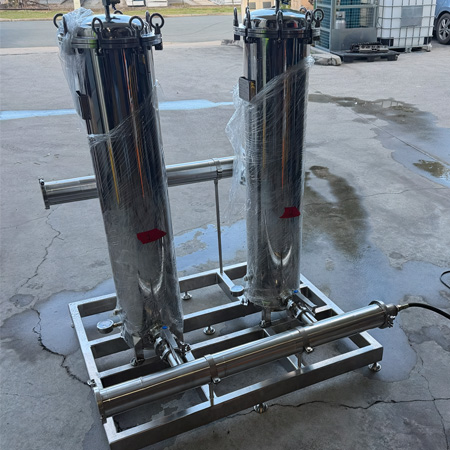
Clean-in-Place, or CIP, systems are used to clean tanks, pipework, pumps, valves, heat exchangers and process equipment without dismantling the system. During a CIP cycle, cleaning solutions may be recirculated through the process line to remove product residue, scale, solids and other contaminants.
Filtration can be used in the CIP return or recirculation line to remove suspended solids from the cleaning solution. This can help protect pumps, spray devices, valves and heat exchangers, while also supporting more consistent cleaning solution performance.
The correct filtration method depends on the process, the cleaning chemistry, the amount of solids present, the required micron rating, the cleaning cycle frequency and whether the customer prefers disposable filter bags, reusable baskets or automated self-cleaning filtration.
CIP filtration is commonly installed in return or recirculation lines where solids can be removed before the cleaning solution continues through the system.
Filter returned cleaning solution before it is recirculated, reused or transferred to another stage of the cleaning process.
Remove larger particles before they reach pumps, valves and downstream equipment in the CIP circuit.
Help reduce the risk of blocked spray balls, nozzles, rotary jet heads and other cleaning devices.
Assist in reducing solid contamination before heat exchangers or sensitive process equipment.
The most appropriate filtration method for a Clean-in-Place system depends on the solids loading, required filtration rating, operating frequency and whether disposable or reusable filtration media is preferred. Monarch can provide a range of filtration solutions for CIP applications.
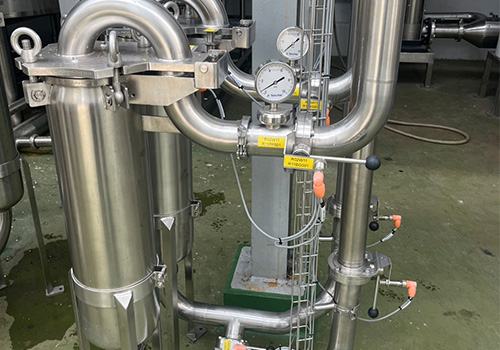
Bag filters provide a simple and economical method of removing particulate contamination from CIP cleaning solutions. They are particularly suitable where solids loading is relatively low to moderate and periodic manual filter change-out is acceptable.
Disposable filter bags are available in a wide range of micron ratings and materials, providing flexibility to suit different cleaning chemicals, operating temperatures and filtration requirements. Their relatively low cost and ease of replacement make bag filtration a practical solution for many CIP systems.
For applications where the cleaning solution is recovered and recirculated, bag filtration can help remove product residues and other suspended solids before the solution is returned to the CIP system.
Typical applications include: CIP return filtration, cleaning solution recovery, protection of pumps and process equipment, and general removal of suspended particulate contamination.
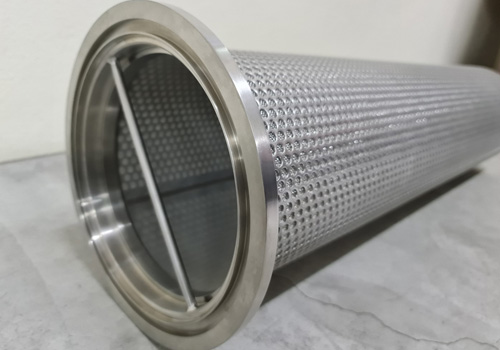
Where the use of disposable filter bags is undesirable, a reusable stainless steel bag replacement basket can provide an effective alternative.
For fine filtration applications, particularly around 5 micron, careful consideration must be given to both the filtration media and the basket sealing arrangement. Standard bag filter housings commonly rely on the filter bag itself to provide part of the seal. If the bag is replaced with a rigid basket without an equivalent sealing system, process liquid may bypass the filtration media.
For this reason, Monarch recommends a purpose-designed replacement basket incorporating a positive sealing arrangement. The GAF RB design uses an integral top support flange with O-ring seals above and below the flange, directing the process liquid through the filtration media and preventing bypass around the basket.
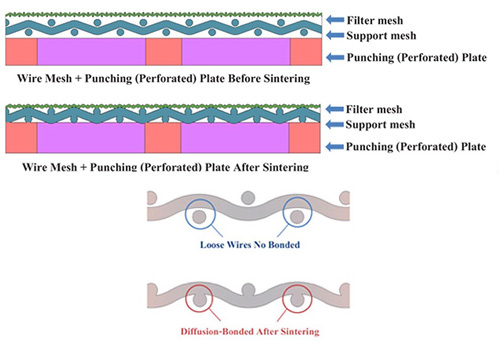
For 5 micron filtration, sintered stainless steel mesh provides additional advantages. The fine filtration layer is diffusion-bonded to supporting mesh layers and, where required, a perforated support structure. This creates a rigid and durable element with improved resistance to differential pressure, vibration, deformation and repeated cleaning.
Benefits include:
Filter layer:
Material:
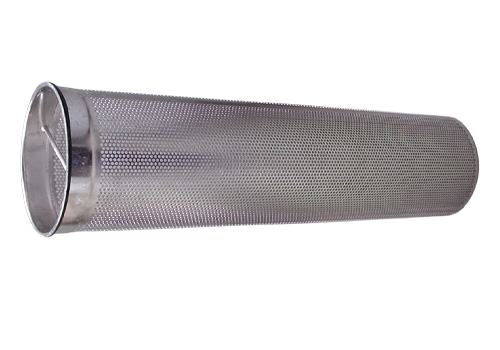
Where disposable filter bags are not preferred, reusable stainless steel fine mesh filter baskets can provide an effective and cleanable filtration alternative.
Fine filtration baskets can be manufactured using woven wire mesh, Hollander weave, or a fine mesh lining supported by a perforated stainless steel basket. The perforated structure provides mechanical support and strength, while the mesh layer determines the required particle retention.
Woven wire mesh is suitable where a defined aperture size is required, while Hollander weave can be selected for finer filtration duties requiring tighter nominal or absolute filtration ratings. Mesh-lined perforated baskets combine the strength of a perforated support structure with the finer filtration performance of woven mesh.
For CIP and other recirculating liquid applications, a reusable basket can reduce reliance on disposable filter media and provides a filtration element that can be removed, cleaned and returned to service.
Selection of the mesh should take into account the required filtration rating, flow rate, solids loading, fluid characteristics and available differential pressure. Fine mesh generally has a lower open area than coarse perforated material and can therefore increase pressure drop if insufficient filtration area is provided.
Key advantages include:
Selection considerations: Required micron or aperture rating, available open area, flow rate, operating pressure, temperature, viscosity, solids loading, material compatibility, cleaning method and the dimensions and sealing arrangement of the existing filter housing.
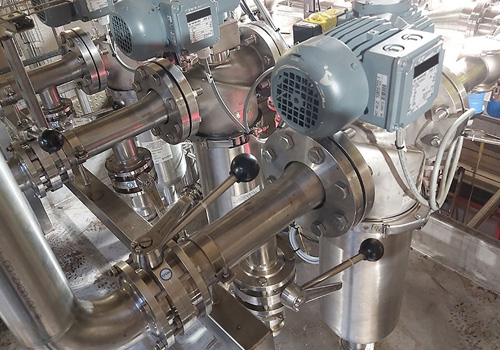
For CIP systems with higher solids loading, frequent cleaning cycles or a requirement to minimise operator involvement, a self-cleaning filter can provide an alternative to conventional bag filtration.
Self-cleaning filters are designed to remove accumulated contamination from the filtration surface without routine manual filter replacement. Cleaning can typically be initiated by differential pressure, elapsed time or a combination of operating conditions, with the collected solids discharged through a purge or drain connection.
This makes self-cleaning filtration particularly attractive where CIP solutions are continually recirculated or recovered for reuse. By continuously removing suspended contamination, the filtration system can help maintain more consistent flow and pressure while reducing manual cleaning and consumable filter usage.
Typical benefits include:
CIP filtration should be selected around the cleaning process, fluid chemistry, operating conditions and maintenance expectations. The correct filtration system must be compatible with the cleaning solution and suitable for the required flow rate, temperature and pressure.
For applications involving fine filtration or reusable baskets, sealing and bypass prevention should be considered carefully. For higher solids loading or frequent cleaning cycles, a self-cleaning filter may provide operational benefits.
Product Supply + Practical Engineering Support
Monarch Asia Pacific combines industrial filtration product knowledge with practical workshop capability from our Brendale facility.
We can assist with CIP filtration selection, bag filter vessels, reusable baskets, self-cleaning filters, fabricated supports, filter skids, replacement components and practical installation considerations.
Contact Monarch Asia Pacific to discuss your cleaning chemistry, flow rate, pressure, temperature, micron rating and preferred filtration method.
Request a Quote